A spice profile refers to the combination of spices commonly used in a particular cuisine and how they work together to create balance, warmth, and depth of flavor. Understanding spice profiles is an important skill in cooking because it helps home cooks move beyond following recipes and begin seasoning food with intention. Middle Eastern cuisine offers a rich example of how spices are used thoughtfully to enhance, not overpower, ingredients.
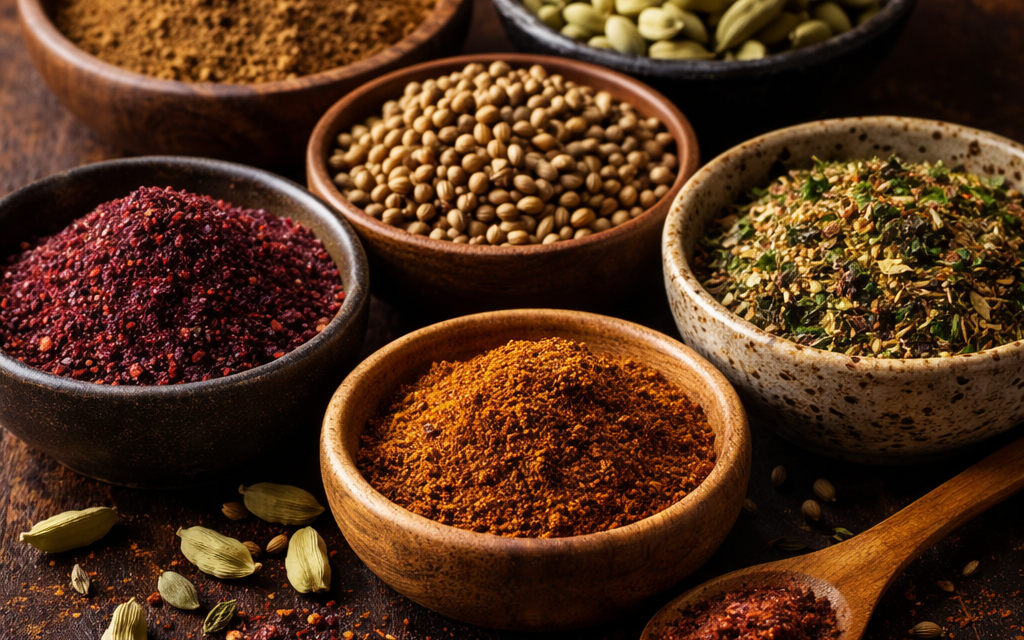
Middle Eastern spices tend to focus on warmth and aroma rather than intense heat. Commonly used spices include cumin, coriander, cinnamon, allspice, cardamom, and sumac. These spices are often layered to create complexity, with each one contributing a specific note. Earthy cumin provides depth, while coriander adds brightness. Cinnamon and allspice are used in small amounts to bring warmth to savory dishes, and sumac introduces a tart, citrus-like finish.
Spice blends play an important role in this cuisine. Blends such as za’atar and baharat are designed to balance savory, herbal, and aromatic elements. Understanding these blends allows cooks to recognize flavor patterns and recreate them across a variety of dishes, from roasted vegetables to grilled meats and rice dishes.
Learning the Middle Eastern spice profile also helps prevent common seasoning mistakes. Knowing that these dishes rely on balance rather than heat encourages restraint and thoughtful layering. Once familiar with the core spices, cooks can confidently adapt recipes or create their own while maintaining the integrity of the cuisine.
Understanding spice profiles is not just about flavor—it’s about cultural awareness. By learning how Middle Eastern spices are traditionally used, cooks gain deeper appreciation for the cuisine and improve their overall cooking skills.