Ohio History
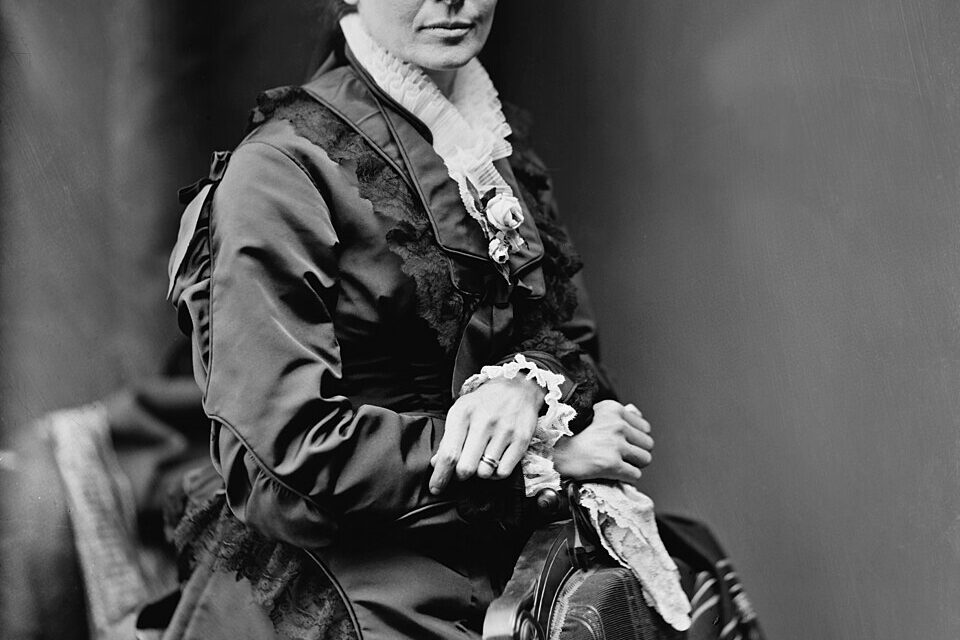
Alice E. Heckler Peters Born (March 13, 1845): Social reformer, educator, and suffrage advocate Alice E. Heckler Peters was born in Dayton, Ohio. She became active in the Woman’s Christian Temperance Union and the broader women’s reform movement of the late 19th century.
A.B. Graham Born (March 13, 1868): Educator Albert Belmont Graham was born in Champaign County, Ohio. Graham later organized youth agricultural clubs that evolved into the nationwide 4-H program.
William G. Sharp Born (March 14, 1859): Diplomat and U.S. congressman William G. Sharp was born in Mount Gilead, Ohio. Sharp later served as U.S. ambassador to France during the early years of World War I and is buried in Elyria, Ohio.
Lucretia Garfield Dies (March 14, 1918): Lucretia Garfield, widow of President James A. Garfield and a native of Hiram in Northeast Ohio’s Western Reserve, died in Pasadena, California. She later established one of the first presidential libraries at the Garfield home in Mentor, Ohio.
John Brough Begins Term as Ohio State Auditor (March 15, 1839): Future Civil War governor John Brough began his service as Ohio State Auditor. Brough later became governor during the final years of the Civil War and is buried at Woodland Cemetery in Cleveland.
World History
Operation Meetinghouse Firebombing of Tokyo (March 9, 1945): During World War II, U.S. B-29 bombers conducted a massive incendiary raid on Tokyo, killing an estimated 100,000 people and destroying large areas of the city in the deadliest air raid in history.
First Intelligible Telephone Transmission (March 10, 1876): Inventor Alexander Graham Bell successfully transmitted the first clear telephone message to his assistant Thomas Watson, saying, “Mr. Watson, come here, I want to see you.”
Great East Japan Earthquake and Tsunami (March 11, 2011): A magnitude 9.0 earthquake struck off the northeast coast of Japan, triggering a devastating tsunami that killed nearly 20,000 people and caused the Fukushima Daiichi nuclear disaster.
Gandhi Begins the Salt March (March 12, 1930): Mohandas Gandhi began a 240-mile protest march from Sabarmati Ashram to the Arabian Sea to challenge Britain’s monopoly and tax on salt, a key act of civil disobedience in India’s independence movement.
William Herschel Observes Uranus (March 13, 1781): Astronomer William Herschel observed what he initially believed was a comet, later recognized as the planet Uranus, becoming the first planet discovered using a telescope.