A spice profile reflects the combination of flavors that define a cuisine. Understanding these profiles helps cooks season food with confidence rather than relying entirely on recipes. Mexican cuisine offers a vibrant spice profile built on earthy, smoky, and slightly spicy flavors that balance richness with brightness.
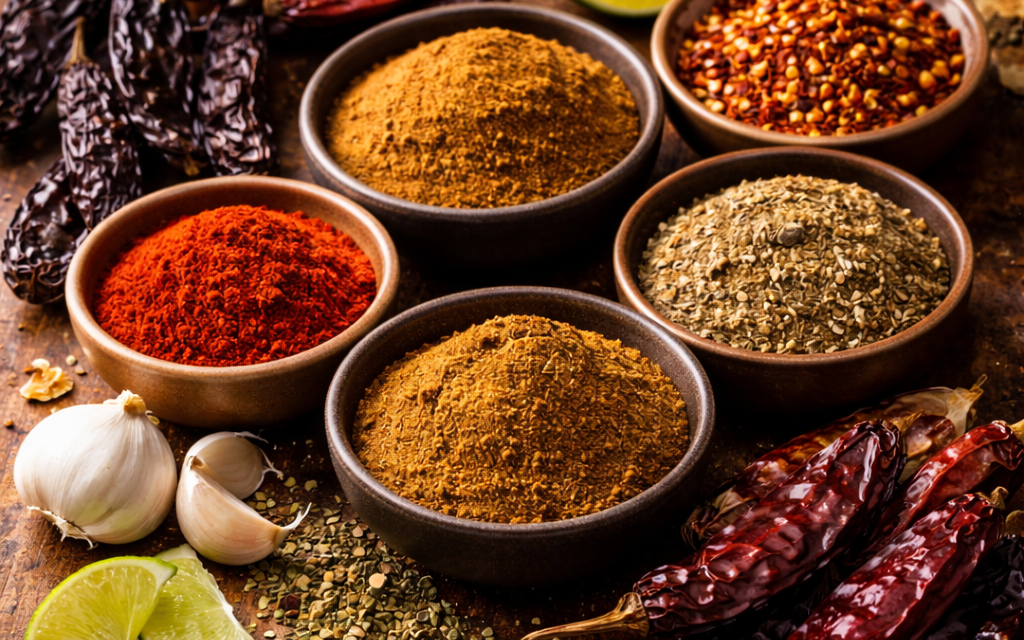
Many Mexican dishes rely on a core group of spices and dried chilies. Common seasonings include cumin, chili powder, smoked paprika, oregano (especially Mexican oregano), coriander, and garlic. Dried chilies such as ancho, guajillo, and chipotle also play an essential role, contributing deep color and layered heat rather than overwhelming spice.
One key element of the Mexican spice profile is smokiness. Ingredients like chipotle peppers and smoked paprika add warmth and depth that complement grilled meats, beans, and roasted vegetables. Cumin and coriander bring earthiness, while oregano introduces herbal brightness that balances heavier flavors.
Mexican cooking often builds flavor gradually. Spices may be toasted briefly in oil or combined into pastes and sauces such as adobo or mole. These techniques help the spices release their oils and create richer flavor throughout the dish.
Understanding this spice profile helps cooks create dishes that feel authentic and balanced. Instead of simply adding heat, the goal is harmony between smoky, earthy, and herbal notes. When cooks learn how these spices interact, they can confidently season tacos, soups, rice dishes, and vegetables with flavors that reflect the tradition of Mexican cuisine.
Learning spice profiles is a valuable way to explore global cooking. By understanding how Mexican spices work together, home cooks gain both cultural appreciation and practical seasoning skills they can use every day.