A spice profile reflects the combination of flavors that define a cuisine. Learning these profiles helps cooks move beyond simply following recipes and begin seasoning dishes with confidence and balance. Thai cuisine offers a unique spice profile built around the careful harmony of spicy, sour, sweet, salty, and aromatic elements.
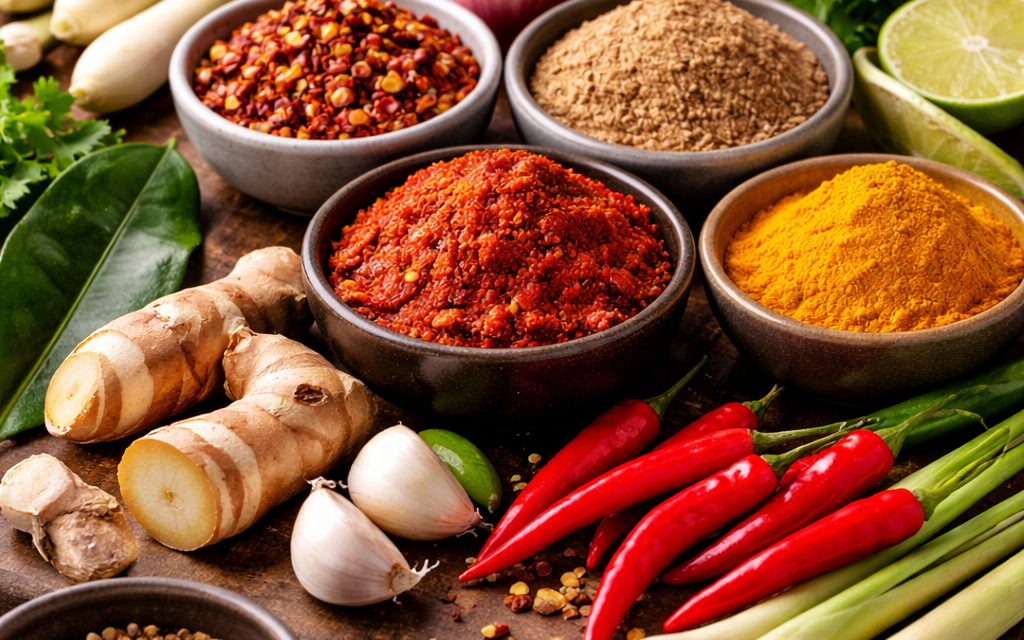
Unlike cuisines that rely primarily on dried spices, Thai cooking often blends fresh ingredients with a smaller selection of dried spices to build flavor. Common spices and aromatics include lemongrass, galangal, garlic, ginger, coriander seed, cumin, turmeric, and dried chilies. Fresh herbs such as Thai basil and cilantro also play a major role in finishing dishes and adding brightness.
Many Thai recipes begin with a curry paste or aromatic base made by grinding ingredients together. This mixture might include garlic, chilies, lemongrass, galangal, and spices such as coriander seed and cumin. When cooked in oil, the paste releases its fragrance and forms the foundation for soups, curries, and stir-fries.
Balance is the defining characteristic of Thai spice profiles. Instead of one flavor dominating the dish, ingredients work together to create complexity. Chili provides heat, lime adds sour brightness, fish sauce contributes saltiness, and palm sugar introduces subtle sweetness.
Understanding this balance helps cooks recreate Thai flavors at home. Rather than simply adding more spice or heat, the goal is harmony between the different taste elements. When cooks recognize how these spices and aromatics work together, they can confidently prepare curries, noodle dishes, and stir-fries that capture the essence of Thai cuisine while still adapting to everyday home cooking.
Do You Know Bedford? Answer: Brandywine Falls.