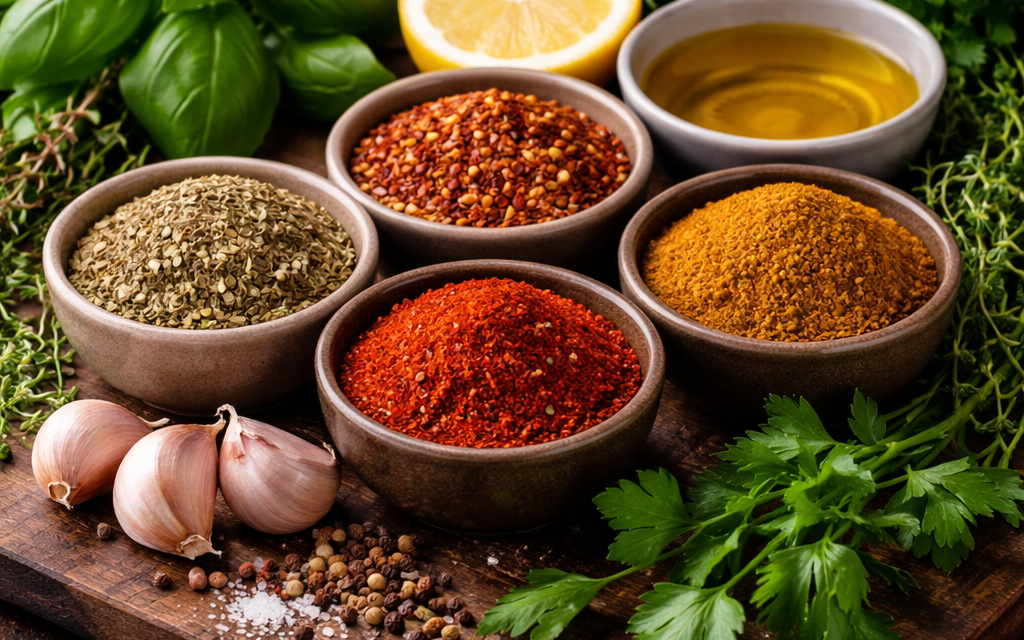
A spice profile represents the collection of flavors that define a cuisine and how those flavors work together to create balance. Understanding these profiles allows cooks to move beyond following recipes and begin seasoning food with confidence. The Mediterranean spice profile is known for its simplicity, freshness, and emphasis on herbs that enhance natural ingredients rather than overpower them.
Mediterranean cooking relies more heavily on herbs than strong, pungent spices. Common seasonings include oregano, basil, thyme, rosemary, parsley, and garlic. These herbs are often paired with olive oil, lemon, and black pepper to create bright, balanced flavors. Unlike some spice-heavy cuisines, Mediterranean dishes typically avoid layering too many spices, instead focusing on clean, recognizable tastes.
One key element of this spice profile is freshness. Herbs are frequently used fresh rather than dried, especially in finishing dishes. Lemon juice or zest is often added at the end of cooking to bring brightness and balance to richer ingredients like meats or olive oil-based sauces.
Mediterranean cooking also emphasizes simplicity in preparation. Herbs may be combined into marinades, sprinkled over roasted vegetables, or blended into sauces like pesto or chimichurri. The goal is to complement the natural flavors of the ingredients rather than mask them.
Understanding the Mediterranean spice profile helps cooks create dishes that feel light, balanced, and approachable. It encourages restraint and highlights the importance of quality ingredients. By learning how these herbs and flavors work together, home cooks can confidently prepare meals that reflect the essence of Mediterranean cuisine while adapting easily to everyday cooking.