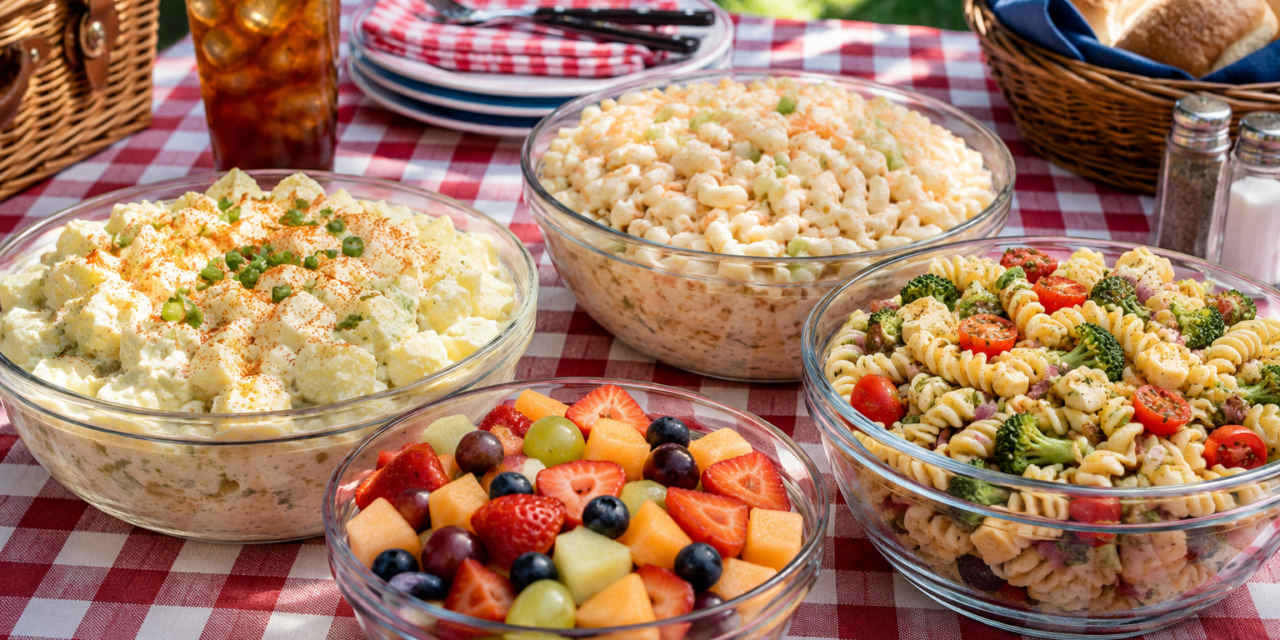
As summer cookouts and picnics return, so do familiar side dishes like potato salad, macaroni salad, pasta salad, and fruit salad. While these foods are staples of backyard gatherings, many people have wondered why they’re called “salads” in the first place. After all, most contain little or no lettuce.
The answer lies in the history of the word itself.
The word salad comes from the Latin word sal, meaning salt. Early salads were mixtures of vegetables, herbs, and other ingredients seasoned with salt, oil, vinegar, or similar dressings. Over time, the meaning expanded to include a wide variety of prepared dishes made by combining ingredients into a single mixture.
Potato salad has roots in European cuisine, particularly in Germany and neighboring regions, where cooked potatoes were mixed with seasonings and dressings. German immigrants helped popularize the dish in the United States, where mayonnaise-based versions eventually became common at family gatherings and community events.
Macaroni salad rose in popularity in America during the late 19th and early 20th centuries as dried pasta became more widely available. Its ability to be prepared ahead of time and served cold made it a natural fit for picnics and potlucks.
Pasta salad is a more recent addition to the summer table. While cold pasta dishes have long existed in Mediterranean cuisines, the pasta salads commonly seen today became especially popular in the United States during the latter half of the 20th century.
Fruit salad follows the same basic concept. A variety of fruits are combined into a single dish, sometimes with juice, syrup, or other flavorings. Although it may look very different from a traditional green salad, it reflects the same idea of bringing multiple ingredients together into one prepared dish.
Today, the term “salad” refers less to specific ingredients and more to a style of preparation. Whether made from lettuce, potatoes, pasta, or fruit, these summer favorites all share a common culinary heritage—one that has been bringing people together around picnic tables for generations.