
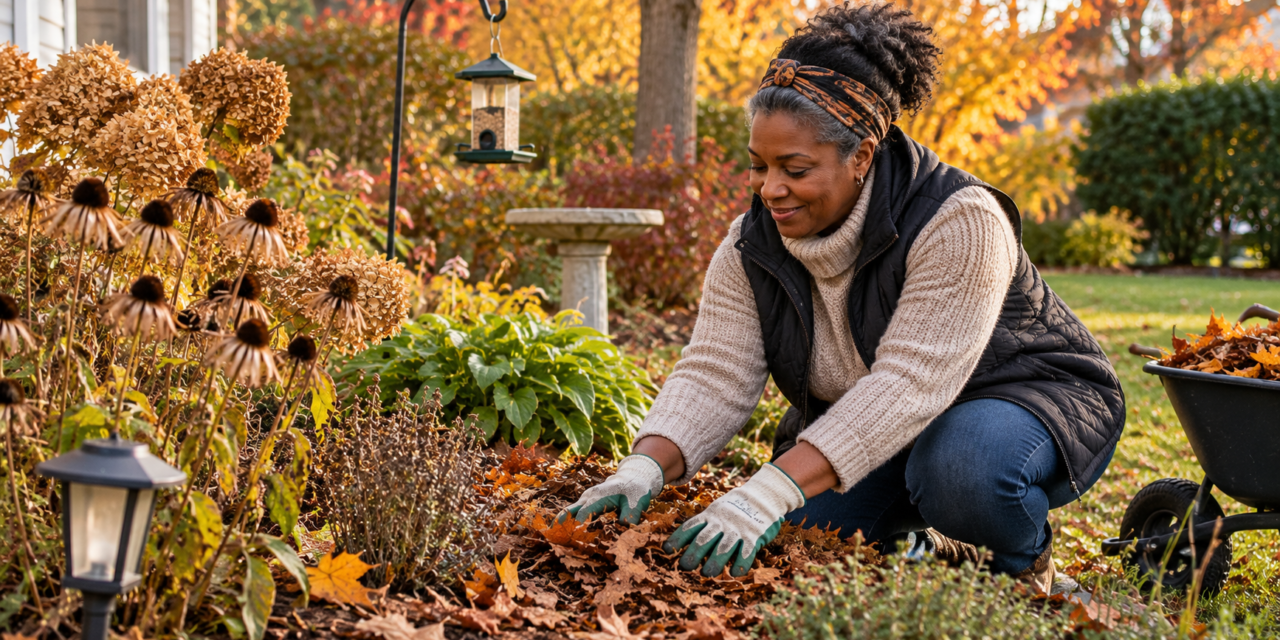
November brings chilly mornings, falling leaves, and the final stages of the gardening season to Bedford. While most flowers have finished blooming and vegetable gardens are winding down, there are still plenty of worthwhile tasks to tackle before winter arrives.
Give Your Garden Some Winter Protection
November is an excellent time to prepare plants for freezing temperatures. Apply a layer of mulch around perennials, shrubs, and young trees to help protect their roots from winter’s repeated freezing and thawing. Keep mulch a few inches away from trunks and stems to prevent moisture problems.
If the ground hasn’t frozen, there’s still time to plant spring-flowering bulbs such as tulips, daffodils, and crocuses. A little digging now can reward you with beautiful blooms when warmer weather returns.
Don’t forget to disconnect and drain garden hoses, empty outdoor watering cans, and clean your gardening tools before storing them for winter.
Leave a Little Mess for Wildlife
While it’s tempting to completely clean out flower beds, consider leaving some healthy plant stems, seed heads, and fallen leaves in place.
Native bees and other beneficial insects may shelter in hollow stems or beneath leaves during winter. Birds also appreciate the seeds left behind by coneflowers, black-eyed Susans, and other flowering plants.
Remove diseased vegetation, but allow a few natural areas to remain undisturbed until spring.
Fun November Project: Create a Winter Wildlife Corner
Turn a quiet section of your backyard into a welcoming space for winter visitors!
Gather fallen branches into a small brush pile where appropriate, leave dried flower heads standing, and consider adding a bird feeder or heated birdbath.
You can even create a simple winter garden display using pinecones, evergreen branches, and decorative stones. These natural elements add visual interest long after colorful flowers have disappeared.
Start Dreaming About Spring
As outdoor gardening slows, November is the perfect time to reflect on what worked this year. Make notes about successful plants, problem areas, and new ideas you’d like to try.
Gardening in Bedford doesn’t truly stop when winter approaches. It simply changes pace, giving both gardeners and nature a well-deserved opportunity to rest and prepare for another growing season.