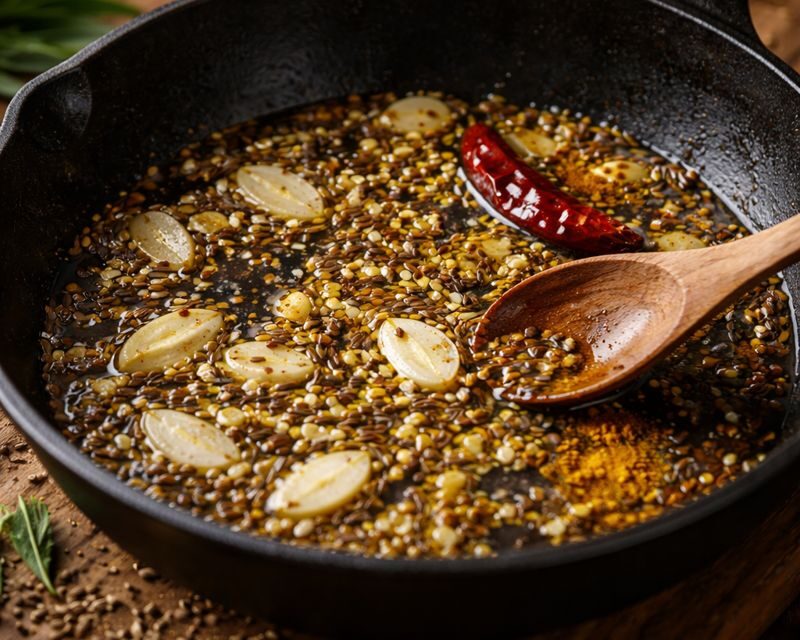
Tempering spices is a cooking technique that involves briefly cooking whole or ground spices in hot fat to release their essential oils and intensify their flavor. Common in South Asian, Middle Eastern, and African cuisines, this method is simple but powerful, transforming everyday dishes into deeply aromatic meals.
How Tempering Works:
The process begins by heating oil, ghee, or butter in a pan until hot but not smoking. Whole spices—such as cumin seeds, mustard seeds, coriander seeds, or dried chilies—are added first. As they hit the hot fat, the spices sizzle and pop, releasing fragrant oils that infuse the fat with flavor. Ground spices may be added briefly afterward, cooking just long enough to bloom without burning.
Once tempered, the spice-infused oil can be used in two main ways: poured over a finished dish, such as lentils or vegetables, or used as the flavor base at the start of cooking soups, sauces, or curries.
Why Tempering Is Important in Cooking:
- Enhances Flavor: Heat unlocks the full aromatic potential of spices, creating deeper and more complex flavors.
- Efficient Technique: A small amount of spice goes a long way when properly tempered.
- Cultural Significance: Tempering is central to many traditional cuisines and is often the defining step that gives a dish its signature aroma.
- Versatility: The technique works across cuisines and can be adapted for vegetables, grains, legumes, and proteins.
Tempering spices teaches cooks the importance of timing, heat control, and aroma. It’s a reminder that flavor isn’t just about ingredients—it’s about how they’re treated. Mastering this technique opens the door to richer, more expressive cooking in kitchens around the world.